




Face of the gods
art and altars of Africa and the African Americas
by Robert Farris Thompson
- 2 Want to read






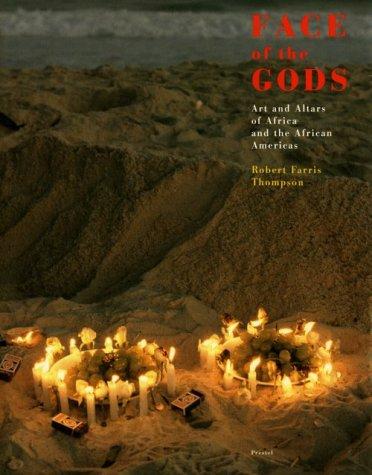


Robert Farris Thompson, Professor of the History of African and African-American Art at Yale University, has been working on this study of African-Atlantic altars for twenty-five years. Face of the Gods is based on fieldwork in both Africa and the Americas - in Mali, Ghana, Benin, Nigeria, Zaire, the Central African Republic, Angola, Zimbabwe, and South Africa, on the eastern part of the Atlantic, and in Cuba, Haiti, Puerto Rico, Suriname, the United States, Brazil, and Argentina, on the western.
The book shows how the Africans and their descendants in the three continents worship not only before points of reverence, foci of sacrifice and prayer, but also, in certain areas, through sacred happening climaxed by possession. In the Afro-Atlantic world the concept "altar" is double: fixed (tree, fire, stone, dais) and moving (ring shouts, dancing, handclapping, circling, ecstasy), leading ultimately to visitation by healing spirits under God.
- Face of the Gods is an introduction, the first in any language, to a brand-new field in art history: the comparative study of Afro-Atlantic altars. Tracing icons and philosophies in altar-making from major African civilizations to the Americas, the book restores many works of art, long considered in isolation from each other, to their original constellating power. Face of the Gods is richly illustrated with full-color plates.
The book opens with the fire altars of the foraging Mbuti, of the Ituri Forest in northeastern Zaire, and of the San, of Namibia. Next it describes minkisi, the extraordinary medicines of God still made in Kongo and the Kongo-influenced civilizations of Central Africa. The minkisi tradition, Thompson shows, traveled intact across the Atlantic.
In Havana as in the Bronx, it expands in altars to Afro-Cuban deities such as Sarabanda, its complex symbolic constructions sometimes artfully contained in as small and secret a place as an apartment closet.
Likewise derived from Kongo belief are Brazilian tree-altars to the spirit Tempo, as well as altars honoring Indians of the South American interior - the creolized caboclo spirits of Brazil's Umbanda faith.
And in the United States, Thompson finds traces of Kongo in everything from recent archeological discoveries to car and motorcycle decor to the myriad forms of traditional black yard art, including bottle trees, memory jugs, and cemetery architecture, all previously most often considered apart from each other.
Next, Thompson describes the altar traditions of the Mande/Akan area, touching on archaeological excavations in Mali, the conical clay altars of Upper Volta and Ghana, and the mosque architecture of Mali and Cote d'Ivoire. Above all, he traces the tradition of the flag altar, and its extraordinary transformation among the maroons of Suriname, in northern South America.
The largest chapter of Face of the Gods - virtually a book in itself - is an exploration of Yoruba religion and its descendants in the Americas, from Cuba to Brazil to the Bronx and New Jersey.
Thompson compares the Nigerian and the American altars to the deities of ancient southwest Nigeria: the clay pillars of the trickster god Eshu, the sacred irons of Ogun, the mortars and axes of the thunder god Shango, and many more - including the altars for the goddesses of the rivers, constructed of found porcelain, which their women makers had charged with appropriative wit centuries before the birth of Duchamp.
The beauty and the moral authority of the altars surveyed in this text, from Africa to the Americas, from antiquity to the present, establish Afro-Atlantic faiths as world religious. As Thompson writes, "All this sainted difference is what God wants: as Thomas More noted in Utopia, 'God made different people believe in different things, because He wanted to be worshiped in many different ways.'"
Check nearby libraries
Buy this book

Previews available in: English
Subjects
Places
| Edition | Availability |
|---|---|
1

Face of the gods: art and altars of Africa and the African Americas
1993, Museum for African Art, Prestel
in English
3791312812 9783791312811
|
aaaa
|
Book Details
Edition Notes
Includes bibliographical references (p. 324-332) and index.
"Published in conjunction with an exhibition of the same title organized and presented by The Museum for African Art, New York"--t.p. verso.
Classifications
The Physical Object
Edition Identifiers
Work Identifiers
Community Reviews (0)
Lists
Wikipedia citation
×CloseCopy and paste this code into your Wikipedia page. Need help?